
Booking Date Not Available !
EVEREST WITH BREAKFAST TOUR
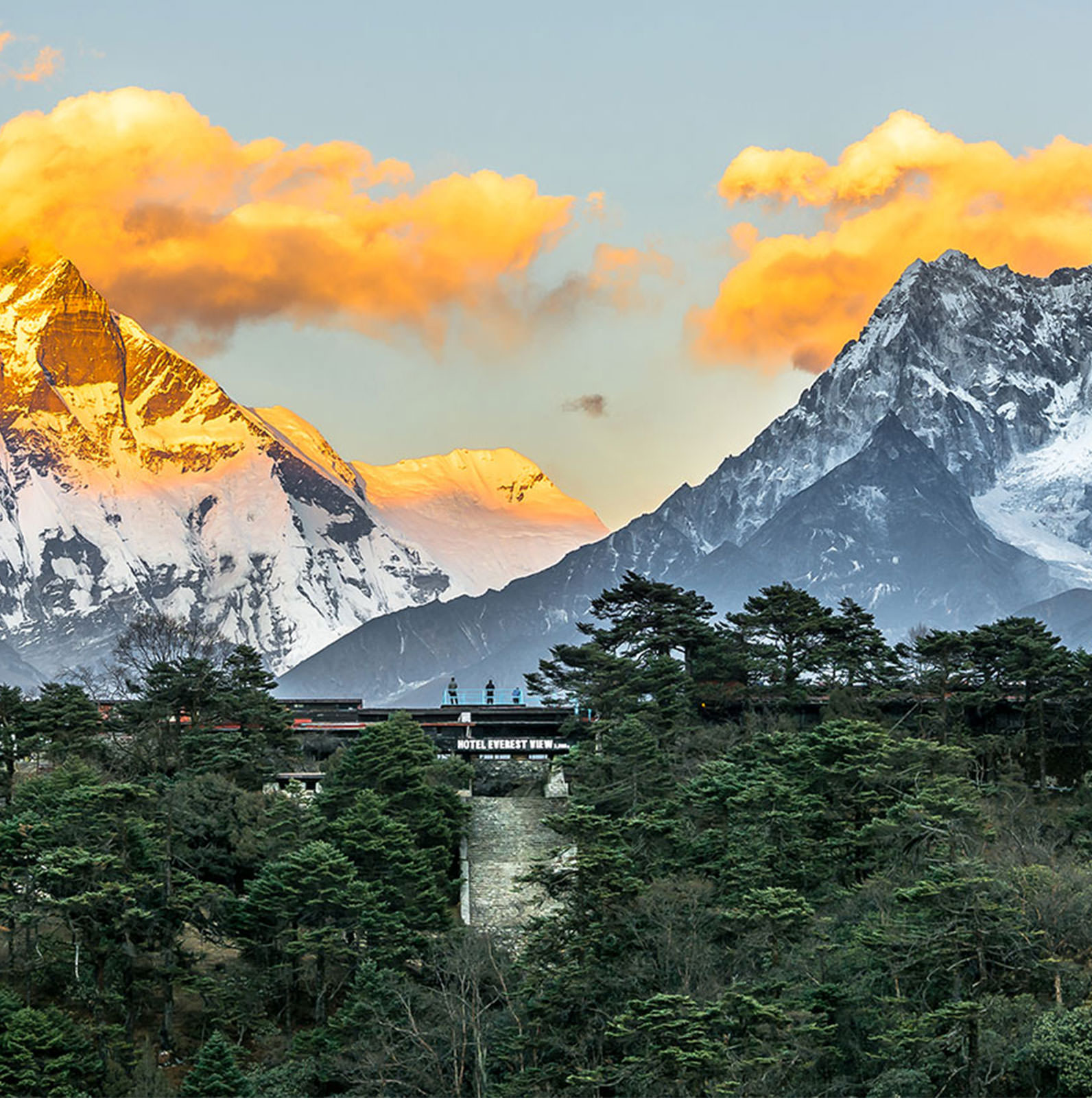
The Everest Base Camp Helicopter Tour with Breakfast at Hotel Everest View is an exhilarating journey that takes you to one of the world’s most breathtaking and iconic locations. Starting from Kathmandu, this exciting helicopter ride offers an unparalleled view of the Himalayas, flying over towering peaks like Mount Everest, Lhotse, and Nuptse. As you approach Everest Base Camp, the views become even more spectacular, culminating in a luxurious breakfast at the Hotel Everest View, where you can savor the moment amidst the grandeur of the highest mountains on Earth.
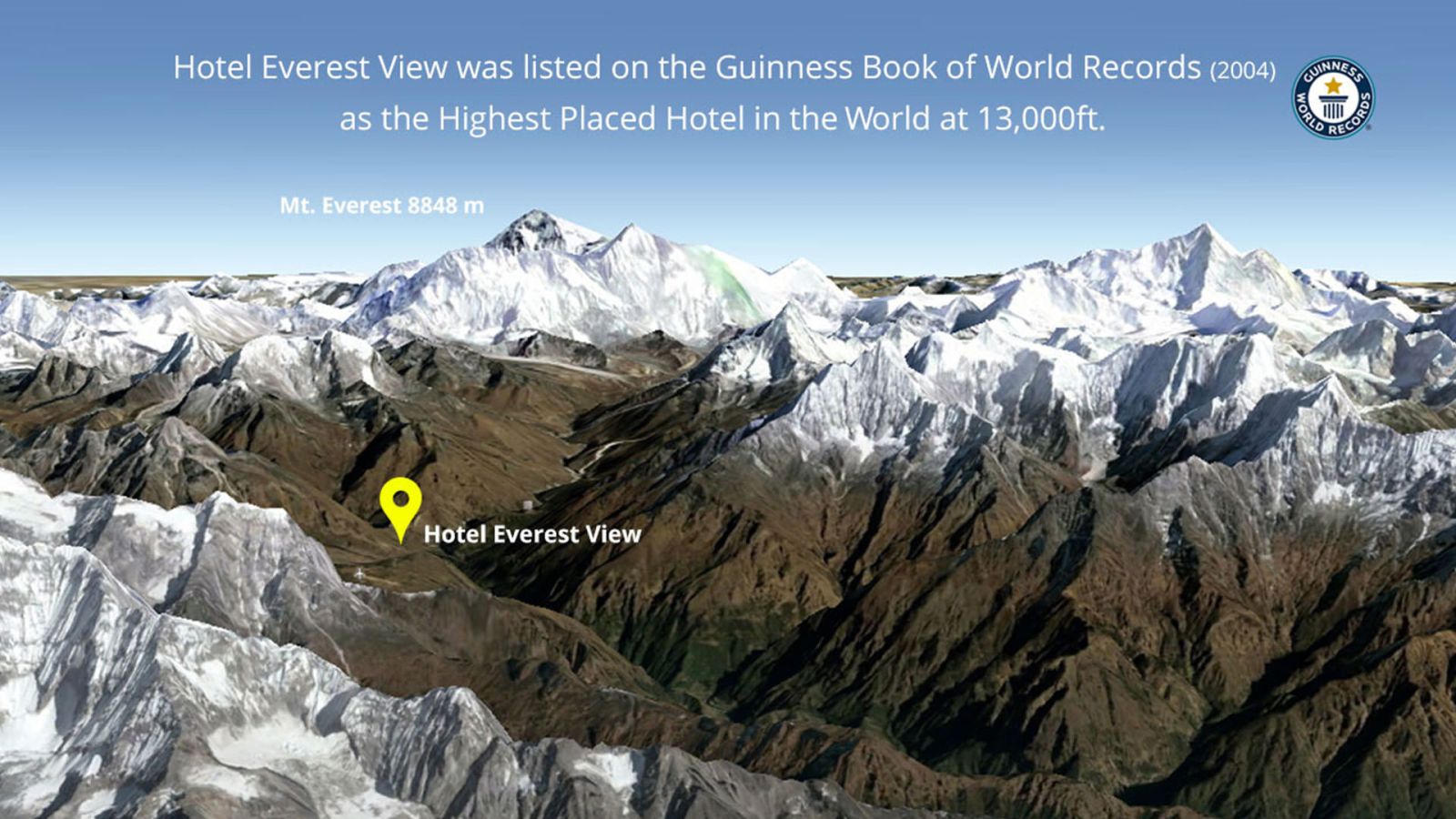
Opened in 1971, Hotel Everest View has been listed on the Guinness Book of World Records (2004) as the Highest Placed Hotel in the world at 13000ft. Featured in numerous guide books and having received media coverage, the resort has become a destination in its own right.
Hotel Everest View epitomizes the adventurous spirit of the Himalayas. It is a perfect place from which to explore the nearby villages and enjoy the beautiful landscape filled with evergreen fir trees, shrubs and rhododendron forests. Our dedicated staff will provide you with excellent service and delicious cuisine to make your stay an unforgettable Life time experience.
Notes:
Cost for Private Helicopter US$ 3900 on twin sharing basis.
Cost for sharing Helicopter US$ 1955 on twin sharing basis.
Major Highlights
-
 Scenic Helicopter Flight: Experience a thrilling helicopter journey over the majestic Himalayas with guaranteed window views of the world’s highest peaks.
 -
 Close-Up View of Mount Everest: Witness Mount Everest (8,848.86m) and surrounding giants like Lhotse, Nuptse, and Ama Dablam from breathtaking proximity.
 -
 Landing at Kala Patthar / Everest View Point: Enjoy an exclusive landing (weather permitting) at one of the best panoramic viewpoints of Everest.
 -
 Breakfast at Everest View Hotel: Savor a delicious breakfast at the world’s highest luxury hotel (Hotel Everest View – 3,880m) with a stunning Himalayan backdrop.
 -
 Unmatched Photo Opportunities: Capture once-in-a-lifetime photos of glaciers, Sherpa villages, and snow-capped peaks from both air and ground.
 -

 Professional Pilots & Safety First: Fly with experienced mountain pilots and well-maintained helicopters designed for high-altitude operations.
 -
 Guaranteed Window Seat: Each passenger enjoys a guaranteed window seat for uninterrupted mountain views.
 -
 Fly Over Sherpa Villages & Glaciers: Witness traditional mountain settlements, ancient monasteries, and the Khumbu Glacier from above.
Early morning we drop you at the airport.
We take flight from Kathmandu make a short refulling stopover at Lukla airport and continue our trip to
Pheriche.
We make another stopover at Periche. From Periche the helicopter will only assist 2 – 3 pax at a
time due to weight limit. We might have to wait about 20 Minutes at Pheriche. The Helicopter will make
helicopter flight over the Kalaptthar and Everst Base Camp and back to Pheriche.
From Pheriche we take flight to Syangboche. After a short walk we will reach Everest View Hotel. We will
have our breakfast with the mesmerizing view of Mt Everest and other mountains.
Fly back to Lukla and Kathmandu Airport
Transfer back to your hotel
Cost Includes
- Helicopter: Kathmandu – Lukla – Periche - Fly over Everest Base Camp – Periche – Syangboche – Lukla – Kathmandu
- Breakfast at Everest View Hotel (short walk from Syangboche Airport)
- Sagarmatha National Park Fee
- Pasang Lhamu Local Committee Fee
- Landing and airport taxes
- Airport pickup and drop
Cost Excludes
- International flights
- Single supplementary cost
- Your entrance visa fee
- Meals not listed in the "Daily food Inclusions"
- Traveling insurance, Personal Expenses, All soft and Hard Drinks
- Drinks, snacks, water as well as other individual needs and expenses
Visa requirement
Visa is the first requirement before you enter Nepal, which you can obtain at Kathmandu airport on arrival or you can also get it in your country of destination from Nepalese Embassy or consulate offices. Or you can apply online also from the website of immigration department of Nepal under the link. https://online.nepalimmigration.gov.np/tourist-visa We would recommend you to obtain visa either online in advance to avoid long queue at the airport. To obtain on arrival visa you required a valid passport and one passport -size photo with a light background. Credit cards are not accepted as payment of visa fee. No On arrival visa for country list -
- AFG
- IRQ
- CMR
- GHA
- SOM
- SWZ
- PSE
- ZWE
- NGA
- ETH
- LBR
Visa Facility Duration Fee:
- Multiple entries 15 days - US$ 25 or equivalent convertible currency
- Multiple entries 30 days - US$ 40 or equivalent convertible currency
- Multiple entries 90 days - US$ 100 or equivalent convertible currency
- For more in details and current updates please visit the link below directly:
-
Travel insurance is necessary
Adequate security gives you therapeutic incorporation in case you turn out to be sick or break your leg at the mountain, your camera overflowing with epic ascending shots is hurt or stolen, your flights are dropped, or you end up included with a disastrous occasion. It's an assurance against potential issues that develop when you're all over the place, and can secure your life. Your own adequate travel insurance ought to be purchased at the time your finalise your booking. This is a mandatory requirement for travel. Sufficient provision that covers personal accidents, death, medical costs and emergency repatriation should all be included under your policy. We would recommend a minimum coverage of 0,000 for each of the aforementioned categories. Your policy will also ideally cover you in cases of cancellations, curtailments, loss of luggage and any personal liabilities that may occur. It is a requirement that you provide proof of sufficient travel insurance.
-
Clothing
From April to the end of October, it is warm in Kathmandu. In Nepal clothing for traveling purpose should be comfortable and light. You can also wear longer shorts provided that it is weather- friendly. In the months of November to the end of March, days are usually warm and evenings are cool. Put on your summer clothes during the day time but in the evening and night it is advisable to carry a light jacket. Winter season starts from December to February. One must be equipped with sufficient winter wears like jackets, sweaters, trousers etc to stay protected from the cold.
-
Health & safety in Nepal
Drinking water is very important factor to be safe and prevent from infectious diseases in Nepal. We recommend you only to drink bottled mineral water, which is available in every hotel and shops. If you are traveling in rural areas, like going for trekking, carry iodine tablets with you. Consult your GP or travel health clinic well before departure to check on recommended vaccinations, which may include typhoid and hepatitis A, plus meningitis if trekking to outlying areas. Malaria is present below 1,200m; consider taking antimalarials. In town, stick to bottled water. Take water-purifying tablets with you if you’re trekking or heading off the beaten track.
-
Altitude sickness
The air pressure is lower as we go higher, that means thinner air, you will be breathing also less oxygen. Same thing happens, when you are trekking in Himalayas above 2000 meter you are breathing less oxygen and there is always danger of having altitude sickness. But it is not for everybody, it also depends on each and everybody’s physical condition. Altitude starts to effect us from 2,000 metres upwards. it is also known as Acute Mountain Sickness (AMS), If trekking at high altitude take precautions to avoid AMS. Make sure you are physically fit, acclimatise to the altitude slowly, eat high-carb meals and drink plenty of water.
AMS is actually more common in fit young men because they are more likely to attempt a rapid ascent by racing up the mountain. It is more safer and enjoyable by planning a sensible itinerary that allows for gradual acclimatisation to altitude as you ascend, but you can back down as fast as you like! If you are not feeling well above 2,500 m, it may be AMS until proven otherwise.
Early symptoms of AMS include:
- Headache
- Loss of appetite
- Nausea
- Fatigue on minimal exertion
- Dizziness
What to do if you have AMS?
- Don’t go higher, rest, drink fluids (not alcohol).
- If symptoms get worse, immediately descend with a friend.
- If symptoms fully go away, go up.
- Consider taking Acetazolamide (Diamox 250 mg twice a day).
- You’ll spend your nights in teahouses / Local guest house
In Nepal Teahouse trekking is the most popular form of arrangement which allows trekkers to stay at local lodge and have wholesome foods. The guest houses offer basic twin bed accommodation. It is cold in the night, we would recommend you to bring your own sleeping bag, if you do not have one, we can also provide you.There are only common bathroom and toilet which you have to share with other tourists and they have sometime hot shower.. This type of local lodges are mostly available in most popular trekking routes like – Annapurna, Mustang, Everest and Langtang areas. You will be carrying all your clothing gears along with you depending on the season but in case if you want to buy or hire any trekking items in Kathmandu or Pokhara. There are lots of trekking stores across Kathmandu and in the main streets of Pokhara.
Trekking Gear that you should bring:
Waterproof hiking boots (worn in)
Waterproof backpack cover and dry bag
A warm sleeping bag
Rain coat or Jacket
Warm Jacket
Water purification tablets
Altitude sickness tablets
Beanie
Hand sanitiser
Sunscreen
Sunglasses
Bandaids
First aid kit
Thermals
Hat
Warm sleeping bag
Warm socks (several pairs)
Torch and batteries
Snacks
Refillable water bottle
Gloves and scarf (depending on season and altitude)
Best Time To Trek In Nepal
The best season go for Trekking in Nepal is from the mid of September to mid of December and from late February through to June consider ever best season of trekking in Himalayas. During this period of months have pleasant climate condition not so hot and cold and visibility of mountain are crystal clear. In these months in trekking areas temperatures is stable in the morning 10 to 12 Celsius and during the day 15 to 20 Celsius depending on the Months. Most important thing is there will be less chance of rain, skies are often clear, providing great vistas of the Himalayas.
June, July and August months are main rainy season in Nepal and involves monsoon with heavy rainfall which makes trekking conditions unfavourable. It is cold in the winter months in December and January generally, the days are clear in winter season in Nepal. In winter season in Nepal is usually snow fall in the higher elevations above 5000m. with risk winds and colder temperatures. Therefore, it is ideal for trekking in the lower elevation.
Nepali customs
Nepal is a Hindu dominated religious nation, when visiting its religious places, you should pay an attention. Because some holy Hindu temples are strictly accessible for the Hindus only so, ensure you read the display board before you enter the site or ask near by some one and always explore clockwise around temples. Always ask before you capture religious temples and peoples in your camera, so that you do not offend the peoples feeling and also in terms of respect to the peoples and their culture. By the way expel your shoes when entering those sites or a neighbourhood's home. Shoes are supposed to be containing dirts and leather wears are not allowed inside the temple.
| Departure Dates Confirmed Dates | Trip Status Trip Status | Price (PP) Minimum rate | |
|---|---|---|---|

US $1500 per person
Book instantly directly with provider
Best price guarantee
Fully customizable trip
Extend your trip at applicable rates
Best price guarantee
Fully customizable trip
Extend your trip at applicable rates
Trip Facts
| Trip Duration : | 1 Days |
|---|---|
| Highest Altitude : | 3962 m. |
| Difficulty : | Easy |
| Season : | April, May, August, September, October and November |
| Activity : | Helicopter Tour |
| Group Size: | 5 pax |
| Transportation: | Helicopter tour |
| Accommodation : | |
| Meals: | |
| Start-End : | Ktm - Ktm |
Whatsapp For Enquiry
 +977 9761161318 |
 +49 15229228976 |
support@holidayorganiser.com
+49 15229228976 |
support@holidayorganiser.com
Need Help? Ask the trip expert
+977 9761161318 |
+49 15229228976 |
support@holidayorganiser.com
"Experienced Travel Experts. Tailored Trips, Every Time."